| HIS 101 World Civilization I Fall 2009 | What's New? |
| Emergency? Call 610-436-3311 |
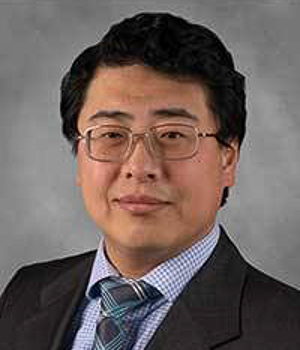
| Instructor: Jim
Jones Email: jjones@wcupa.edu; Telephone: 610-436-2168 | Office: 519
Main Hall
West Chester, PA 19383 Hours: WF 11-noon & MWF 1-2pm |
TEXTBOOK (required): A collection of excerpts from historical source documents compiled by Jim Jones called The Western World: HIS 101 Readings (Penguin Custom Editions, 2002), plus supplemental readings linked to this web page, ( http://courses.wcupa.edu/jones/his101.htm).
COURSE REQUIREMENTS: Read assignments before class and prepare comments and/or questions, attend class to discuss assignments, be prepared for unannounced quizzes during class, and pass three (multiple choice & short answer) examinations.
ATTENDANCE: An excused absence is one for which you can provide a valid written excuse concerning a medical condition, legal proceeding, university-sanctioned event or death of an immediate family member (i.e. parent, sibling or child). All other absences are unexcused. You are entitled to a naximum of three unexcused absences without penalty, but each additional absence will reduce your final grade by 1/3 of a letter. NOTE: If you face an extraordinary circumstance that merits special consideration, discuss it with your professor before you are absent. Requests made after an unexcused absence will not be considered.
GRADING: There are three major examinations worth 25%, 30% and 30% of your final grade. Class participation counts for 5% and the remaining 10% will come from unannounced quizzes. NOTE: You may drop the grade of your lowest quiz and any quiz you miss because of an excused absence.
CONTEXT: For most of history, humans lived in small groups who hunted and gathered their food but about 10,000 years ago they began to farm. That led to most of what we call civilization through a variety of processes that left behind sources. In this course we will read and discuss sources in order to accomplish two things: 1) learn what happened and 2) learn how to know when (and how much) to trust sources.
COURSE GOALS: The course fulfills three general education goals emphasized by the Department of History: 1) developing effective communication skills, 2) developing critical thinking skills by teaching students to analyze and critique primary historical sources, and 3) presenting opportunities to consider informed value decisions and ethical choices.
CHEATING/PLAGIARISM: Cheating is any act that "defrauds, deceives or employs trickery" in order to obtain credit for work which has not been completed. Plagiarization is the act of "passing off the ideas of another as one's own work." Anyone who cheats or plagiarizes will receive a zero (i.e. a grade much lower than F) for that examination or assignment. A second offense will result in a final grade of F and referral to the University's judicial system.
DISABILITIES: We at West Chester University wish to make accomodations for persons with disabilities. Please make your needs known by contacting the professor and/or the Office of Services for Students with Disabilities (located in 223 Lawrence Center) at 610-436-2564. Sufficient notice is needed in order to make the accommodations possible. University desires to comply with the ADA of 1990 by making accommodations
DISCRIMINATION: West Chester University prohibits discrimination, including sexual harassment, of any individual based on race, color, national origin, sex, sexual orientation, marital status, age, religious creed, disability or veteran status. This course incorporates the University's commitment to an environment free of discrimunation. Any individual having suggestions, problems, complaints or grievances with regard to equal opportunity or affirmative action is encouraged to contact the Director of Social Equity at ext. 2433.
SUBSTANCE USE/ABUSE: West Chester University is committed to improving retention, graduation and time-to-degree rates by assisting students during key transitional periods in their academic careers. Because the professor believes that alcohol and drug issues can compromise student success, he has participated in the "Partners in Prevention" training program to learn how to recognize addiction and provide referrals to assistance. If you wish to talk about any of this -- in strictest confidence -- please contact the professor outside of class.
Visit Jim Jones' other course web sites at
http:// courses.wcupa.edu/jones.
Date
Topic
Reading Assignment
Aug. 31
Lecture:
"Introduction to Urban Civilization"
None
Sep. 2
Lecture: "The
Oldest Known
Urban Civilizations"
None
Sep. 4
Discuss
Herodotus, The Egyptians
5-7
You can freely drop classes through
Saturday Sep. 5 and add them through Sunday Sep. 6
by going
on-line. If you add any class
late, you are responsbile for ALL earlier assignments.
Sep. 7
Labor Day (no class)
Read ahead
Sep. 9
Lecture:
Persia in world history; discuss Herodotus, Persian Customs Notes and 1-4
Sep. 11
Discuss
Herodotus, Circumnavigating
Africa
8-9
Sep. 14
Lecture:
"Greek Democracy and Society"
Sep. 16
Discuss
Thucydides, The Greatest War in History
18-29
Sep. 18
Discuss
Xenophon, Spartan Rule
10-12
Sep. 21
Discuss
Arrian, Alexander Reaches His
Limits
30-34
Sep. 23
Lecture:
"Introduction to Roman history"
Timeline
Sep. 25
Discuss Plutarch, Pirates Infest the Roman Seas
42-44
Sep. 28
Discuss
Tacitus, Roman Imperialism: The Victim's
View and German Democracy and Justice
47-50
Sep. 30
Review for
first exam
Things to know
Oct. 2
FIRST
EXAM
on human history up to the Roman Empire
Oct. 5
Discuss
Gregory of Tours, The Life of
Clovis
51-56
Oct. 7
Discuss
Gregory of Tours, Merovingian
Anarchy
57-61
Oct. 9
Discuss
Justinian, Sexual Harassment
in Ancient Rome
45-46
Oct. 12
Fall Break (no class)
Read ahead
Oct. 14
Discuss
Einhard, The Emperor Charlemagne
63-70
Oct. 16
Discuss Otto
of Freising, The Election and Coronation of an
Emperor
71-73
Oct. 19
Discuss Adam
Usk, The Election and Coronation of a
Pope
74-76
Oct. 21
Lecture:
"Introduction to Islam"
Notes
Oct. 23
Discuss selections from the
Koran on women and divorce
77-82
Oct. 26
Anonymous, The First Contact of Crusaders and
Turks
92-96
Oct. 28
Anna Comnena, Byzantium Meets the Crusaders
97-99
and Notes
Oct. 30
Discuss
Villehardouin, The Fall of
Constantinople
100-106
Friday Oct. 30 is the last day to drop a
class or to complete work from the previous semester.
Nov. 2
Discuss
Bernard of Clairvaux,
Monastic Decadence
126-137
Nov. 4
Review for
second exam
Things to know
Nov. 6
SECOND
EXAM on the Middle Ages
Nov. 9
Lecture: "The
Late Middle Ages"
Notes
Nov. 11
Discuss Henry
Knighton, The Impact of the Black Death
154-158
Nov. 13
Discuss
Froissart, The English Peasants' Revolt
145-153
Nov. 16
Discuss
Pierre DuBois, How to Recover
the Holy Land
107-112
Nov. 18
Discuss
Giovanni Boccaccio, A Jew
Converts to Christianity
159-163
Nov. 20
Discuss
Giovanni Boccaccio, The
Inquisition Ridiculed
164-167
Nov. 23
Discuss
Baldesar Castiglione,
What Women Want
168-170
Nov. 25-7
Thanksgiving (no class)
Read ahead
Nov. 30
Discuss
Margery Kempe, A Medieval Woman on
Pilgrimmage
113-121
Dec. 2
Discuss Martin Luther, Against
the Sale of Indulgences
186-193
Dec. 4
Lecture: Maritime empires
Dec. 7
Discuss
Christopher Columbus, Journal
of the First Voyage
171-185
Dec. 9
Discuss
Michel de Montaigne, Comparing
the Old World and the New
194-203
Dec. 11
Lecture: "modern ideas" of the 16th century
Dec. 14
Review: What can
we conclude from 10,000 years of history?
Things to know
Dec. 15-19
THIRD EXAM
on the origins of the modern world
Section 1 on Wed. Dec. 16, 8-10am; Section 4 on Fri. Dec.
18, 3:30-5:30pm