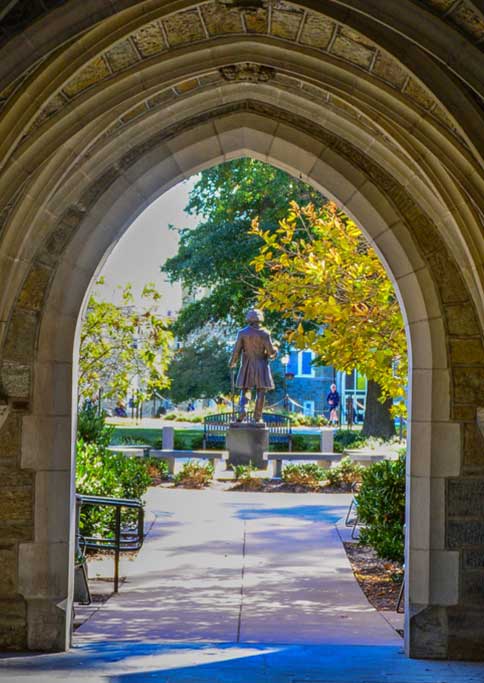
By Edvard Greig

Background
In the Hall of the Mountain King was composed by a Norwegain
composer named Edvard Greig, who was born on June 15, 1843 and died on
September 4, 1907. Edvard Greig showed musical talents at an early
age. In the Hall of the Mountain King, one of Greig's
most famous works, is part of the Peer Gynt Suite #1, which includes
Morning, Ace's Death, Anitra's Dance, and In the Hall of the Mountain
King. In The Hall of the Mountain King is about a man named
Peer, who gets the trolls upset because he will not marry the kings's daughter.
Melody
Melody is the arranging of notes or sounds into music
time. It is also the part of the song that you can sing. For
example "Twinkle, Twinkle Little Star".mid
is a melody that can be hummed. In the Hall of the Mountain King
has a melody that can be hummed. It is:

This melody repeats throughout the entire piece. The only difference
is the intervals. The second time you hear the melody a few of the
intervals are different, such as in measure one. There is a difference
from the fourth note to the fifth, however, when the melody comes in again
a different interval is played. Listen to the piece and try to determine
where the melody differs.
The contour of a piece of music is the shape that
the notes make, or the direction that the go. The contour of the melody
of In the Hall of the Mountain Kingis unique. It begins by
going up the scale and then, once it reaches the F# it goes down a major
third and then back up to the F#. It is similar to a roller coaster.
This contour repeats throughout the piece, also. While listening
to the piece contour the melody line with your hands.
melody.vcd
Rhythm
Rhythm is the forward motion that drives the piece.
If you look at the example below you will see that it is compromised mainly
of eighth notes and quarter notes. These quarter and eighth notes
make up what is called the rhythm. Try to clap and count the rhythm
that is pictured below.
Form
Form is the way a piece of music is organized.
Think of it as a puzzle. A puzzle is compromised of many pieces that
make up an entire picture. Form works in the same way. Each
section is part of the entire piece of music. The piece of music
consists of all of the sections put together. An example of form
is A B A, A B C, and sonata form. Look at the form of this
piece. How are the sections put together? Examine the chart
below and then listen to In the Hall of the Mountain King.
As you are listening try to determine where the sections change, for example,
listen form theme A. Next, listen to see if you can hear where
them B comes in. Think about the differences between the two themes.
The form of this piece is rather simple. The
form can be related to the differences in intervals in the melody, which
was discussed above. Look at theme A and theme B. Notice the
differences in the intervals from. These differences in intervals
are what makes each theme different in this particular piece of music.
Not all music is like this, however. In some cases the themes are
entirely different, making it easy to hear where the themes change.
In case you had trouble determining the form here is an overview:
Meas. #
Description
|
|
Theme A |
|
|
Theme A' |
|
|
Theme B |
|
|
Theme B' |
|
|
Theme A |
|
|
Theme A' |
|
|
Theme A' |
|
|
Theme A' |
|
|
Theme B |
|
|
Theme B' |
|
|
Theme A |
|
|
Theme A |
|
|
Theme A |
|
|
Theme A |
|
|
Theme B |
|
|
Theme B' |
|
|
Theme A |
|
|
Codetta |
Harmony
Harmony is the underlying music beneath the melody and is often called the accomaniment part. It is the icing on the cake. It can add color and texture and helps to make the piece unique. The harmony in In the Hall of the Mountain King is similar to the melody, except that there are different notes. Some of the parts are completely different in that they are simple quarter, eighth, or sixteenth notes. Listent to the piece and try to hear the harmony. The first measure consists of staccato, or short, quater notes. These quarter notes are found throughout the piece.
Expression:
Expression is the way the music is conveyed.
It consists of the use of dynamics, phrasing, and the way the actual notes
are played. If you listen to In the Hall of the Mountain King
you will hear the piece get louder and faster as the music progresses.
This is part of expression. If you time a few minutes to think about
music you listen to you will realize that you like when it moves from one
idea to the next. If it would stay the same you would become bored
and stop listening. Expression keeps you interested in what you are
listening to. Say a sentence with absolutely no expression, in other
words, say the sentence as though it were flat. This is absolutely
boring and terrible to listen to.
Dynamics help to create expression. Examples
of dynamics in In the Hall of the Mountain King are p, pp, fp, crescendo,
decrescendo, mf, ff, and fff. As you can see there is a great deal
of expression in this piece and that expression helps to keep the listener
tuned in to what you are hearing. Listen to the piece one last time
and pay attention to the various ways expression is used.
greig2.vcd
Click Here for Test.
click
here to learn more about grieg

This picture of Edvard Greig is courtesy of http://www.mnc.net/norway/
The background is courtesy of tcastle.com